Training Tips For New Basketball Players
Thinking about stepping onto the basketball court for the first time? You may have been inspired by watching your favourite team, or you want a fun way to stay active. Basketball is fast-paced, exciting, and full of skill—and learning it can be just as enjoyable as playing the game itself. But where should you start? Here's a guide packed with practical tips to help you build your skills and confidence from day one.
Build Your Ball Handling Skills
Dribbling is the foundation of basketball. The better you are at controlling the ball, the more confident you’ll feel on the court.
Start with simple stationary dribbling using your dominant hand, then switch to your weaker hand. When you can comfortably keep the ball under control without looking down, move on to walking while dribbling. Gradually increase your speed.
One proper drill is "figure-eight" dribbling, where you move the ball in and out of your legs in a figure-eight pattern. This improves coordination and ball control. Remember to keep your knees slightly bent and your body balanced so you can react quickly.
Learn The Art Of Passing
A good pass can be the difference between scoring and losing possession. There are three main passes to master: chest pass, bounce pass, and overhead pass.
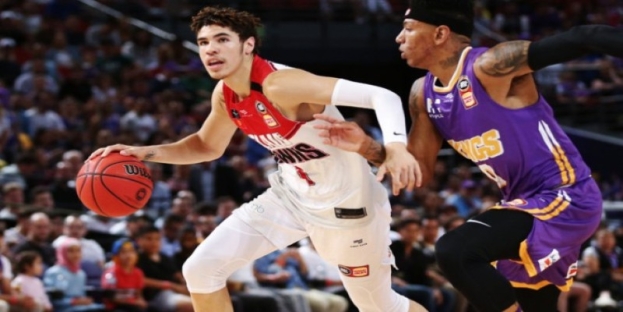
Work with a partner and practice each type at different distances. Focus on accuracy and timing rather than throwing too hard. A well-placed pass to a teammate in stride can create easy scoring chances.
When you don’t have a partner, try passing against a wall. Mark a spot on the wall with tape and aim for it repeatedly to improve precision.
Master The Basics Of Shooting
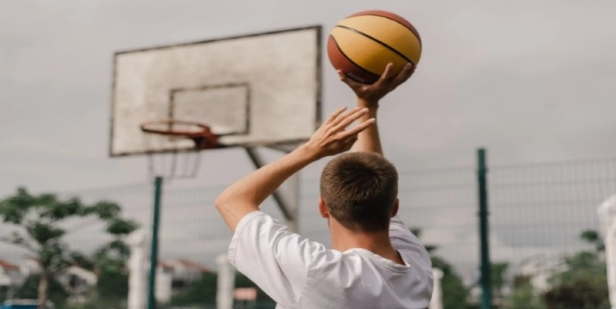
A perfect shot starts with your stance. Feet shoulder-width apart, knees bent, and eyes locked on the target—not the ball. Use your dominant hand to shoot and your other hand to guide the ball.
The "BEEF" method—Balance, Eyes, Elbow, Follow-through—is a simple way to remember shooting fundamentals—practice from short distances first. Once you're consistent, slowly step back.
Don’t rush into three-pointers right away. Developing accuracy close to the basket will make long-range shots much easier later.
Develop Your Footwork
Basketball isn't just about what you do with your hands. Your feet play a huge role in both offence and defence.
Work on quick side-to-side shuffles for defence. For offence, practice pivoting to protect the ball from defenders and create space for a pass or shot.
The “jump stop” is another useful move—where you land on both feet at the same time to maintain balance and control after receiving the ball or coming to a sudden stop.
Improve Your Conditioning
Basketball demands speed, agility, and stamina. Without good conditioning, even the best skills won't be as practical late in the game.
Include sprints, ladder drills, and short bursts of running in your workouts. Mix in some bodyweight exercises like squats, push-ups, and planks to strengthen your core and legs.
Playing half-court games with friends is also a fun way to build endurance while practising your skills in real game situations.
Understand The Rules And Positions
Knowing the rules helps you avoid unnecessary turnovers and fouls. Learn about travelling, double dribbling, and the shot clock.
Familiarise yourself with the five leading positions—point guard, shooting guard, small forward, power forward, and centre. Each has different responsibilities. Even if you don't have a fixed position yet, understanding them will help you read the game better.
Play With Others As Much As Possible
No amount of solo practice can replace the experience of playing with others. It helps you develop court awareness, timing, and communication skills.
Join a local youth league, find a pickup game at a community court, or play with friends after school. You’ll quickly learn how to adapt to different playing styles and make faster decisions under pressure.
Watch And Learn From The Pros
Watching professional basketball isn't just entertaining—it's educational. Please pay attention to how players move without the ball, the way they set screens, and how they space the floor.
Try focusing on a single player for a quarter and study their decisions. You can apply some of these tactics in your games.
Practice Consistently And Track Progress
The more regularly you practice, the quicker you’ll improve. Set small, realistic goals, like hitting 20 consecutive free throws or dribbling without losing the ball for a set time.
Keeping a simple training log can be motivating. Write down what you practised and what you found challenging. Over time, you'll see how much progress you've made.
Learn Defensive Skills Early
A strong defence can win games just as much as a good offence. Start by practising a solid defensive stance—feet wide, knees bent, and hands active.
Work on anticipating your opponent's moves, not just reacting to them—practice closeouts by quickly approaching a shooter while maintaining control of your balance.
Focus On Court Awareness
Court awareness means knowing where everyone is—your teammates, your opponents, and the ball—at all times.
Play “heads-up” basketball by keeping your vision forward while dribbling. This helps you spot open teammates and avoid turnovers. Over time, you’ll naturally make smarter decisions under pressure.
Warm Up And Stretch Before Every Game
Injury prevention starts before you step on the court. Begin with light jogging or dynamic movements like high knees and butt kicks to get your blood flowing.
Stretch your legs, hips, and shoulders to stay loose and mobile. A proper warm-up can improve performance and help you play at your best for the entire game.
Stay Positive And Keep Learning
Basketball is as much a mental game as it is physical. You’ll miss shots, lose games, and make mistakes—that’s part of learning. Stay positive, focus on improvement, and celebrate small victories along the way.
The best players didn't become great overnight. They worked hard, practised consistently, and kept a love for the game alive. Keep showing up, and you'll see your skills grow with every session.